Paris’ Secret Season: January–February
How to use this guide
This is Paris’s destination-level Secret Season guide — designed to help you decide whether visiting during the winter months actually works for you. To understand how Paris’ Secret Season compares to the rest of the year, the table below outlines how Peak, Shoulder, and Secret seasons function across all months — including differences in crowds, cost, and overall travel experience.
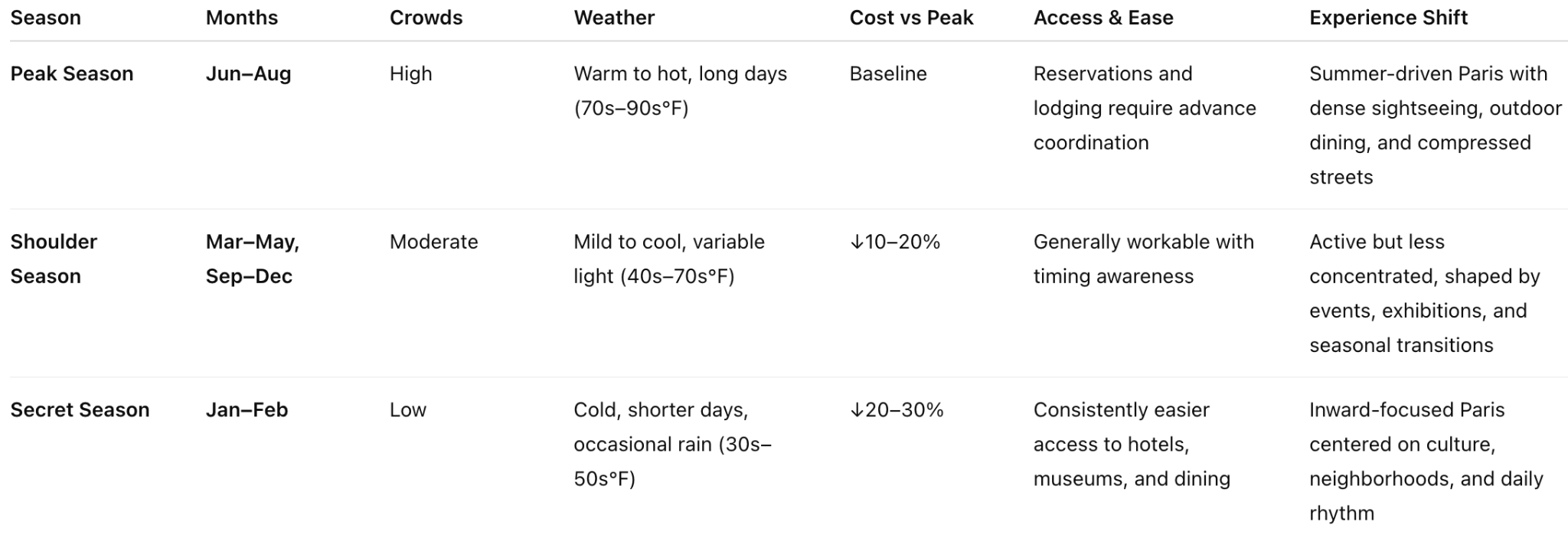
Read our full explainer here → Peak vs Shoulder vs Secret Season: How to Read Our Guides
If you’re looking for specific hotel recommendations, activity ideas, packing lists, or family-focused planning, check out all of our Paris content here.
Paris is often associated with springtime blooms, café terraces, and long summer evenings. But January and February quietly offer something different — and for the right traveler, something better.
Instead of crowds and peak pricing, winter brings quieter streets, easier reservations, and a cultural rhythm that rewards flexibility and curiosity. While daylight hours are shorter and temperatures are cooler, the core experiences that define Paris remain fully available year-round.
This is Paris without peak-season pressure — not a diminished version, but a more navigable one.
The Verdict:
YES
Paris meaningfully benefits from being visited during its secret season. January and February offer fewer tourists at major landmarks, easier access to restaurants and museums, winter sales, and lower hotel rates — all while the city’s cultural and architectural heart stays open.
For travelers who value atmosphere, culture, and flexibility over long outdoor days, Paris’s secret season offers depth without compromise.
Why January–February Works
During peak months, Paris can feel crowded at popular sights, with longer waits for reservations and higher travel costs. In winter, that pressure lifts.
You’ll notice:
Shorter lines and lighter crowds at major museums and landmarks
Easier reservations at cafés, bistros, and wine bars
Winter sales (Les Soldes) that bring retail discounts citywide
A slower, more local pace across neighborhoods
Paris doesn’t close in winter — it simply shifts the way visitors experience the city.
What to Expect in Winter
Paris in January and February does require expectation setting around weather and daylight.
Typical winter conditions include:
Cold temperatures, especially in the evenings
Shorter daylight hours
Occasional rain or gray skies
More indoor-focused days
Outdoor experiences still exist, but they work best in shorter bursts between indoor visits. Planning flexibility — rather than rigid, weather-dependent schedules — makes for the most enjoyable days.
What Still Works Exceptionally Well
One of the reasons Paris earns a YES is because the essence of the city remains intact, even in winter.
Still fully enjoyable:
World-class museums and galleries (Louvre, Musée d’Orsay, Centre Pompidou)
Iconic architectural landmarks (Notre-Dame exterior spaces, Sacré-Cœur, Eiffel Tower views)
Neighborhood shopping and covered passages
Cafés, bistros, wine bars, and cultural venues
Seasonal exhibitions and performances
Without peak-season congestion, these experiences often feel more personal and unhurried.
Secret Season Annual Events
Paris’s winter calendar has a few moments worth noting:
Winter Sales (Les Soldes) — January — Nationwide retail sales with strong discounts across Paris
Fashion Week — Late January–February — Major fashion events that temporarily increase hotel demand
Note: Major events like Fashion Week can increase hotel rates during specific weeks.
Outside of these periods, January and February remain among the quietest and most affordable times to visit. For more detailed information on the specific annual events for the current/upcoming Secret Season, see What to do in Paris in Winter (Without the Crowds) - post coming soon!
Cost Snapshot
Traveling to Paris in winter typically comes with noticeable savings compared with peak months.
Hotels: 20–30% lower than peak spring and summer
Flights: 15–30% lower from major U.S. gateways (varies by origin)
Dining & Museums: Fully available year-round, with easier reservations
For travelers prioritizing value without sacrificing quality, winter pricing is a meaningful advantage.
How to Plan Your Days in Paris’ Secret Season
Paris in January–February rewards flexible, weather-responsive planning rather than rigid itineraries.
Sunny or Clear Day
Warm up your winter walk with:
Neighborhood strolls through Saint-Germain, Le Marais, or Montmartre
Riverbank paths along the Seine
Heated café stops between outdoor segments
Chilly Day
When temperatures dip:
Explore museums and major exhibitions
Appreciate architectural landmarks like Sainte-Chapelle’s stained glass
Wander covered shopping passages (Galeries Lafayette, Passage du Grand Cerf)
Rainy Day
Rain doesn’t derail winter in Paris — it simply redirects it:
Museum hopping
Interior landmarks and galleries
Cafés, wine bars, and leisurely meals
Evening Planning (Winter-Specific Tip)
Winter evenings arrive earlier in Paris, and that shift naturally changes how days wind down.
Many travelers find:
Late afternoons are an ideal transition point from outdoor walking to indoor experiences
Earlier dinner reservations are easier to secure and feel more relaxed than peak evening hours
Evenings lean toward museums open late, dining, cafés, wine bars, or performances rather than extended sightseeing
Because so much of Paris’s culture unfolds indoors — in dining rooms, galleries, theaters, and intimate neighborhood spaces — this rhythm fits winter especially well. Nights feel intentional rather than compressed, with less pressure to “fit everything in.”
This pacing allows the city’s cultural depth to take center stage instead of racing daylight or crowds. For a more detailed breakdown of how to structure winter days in Paris, see What to Do in Paris During Winter (Without the Crowds) — coming soon.
Who This Season Is Best For
Paris in January–February is ideal if you:
Prefer fewer crowds and quieter experiences
Enjoy café culture, museums, and indoor exploration
Value cultural depth and flexible planning
Are comfortable with winter layering and occasional gray skies
It’s less ideal if:
You want long outdoor afternoons or terrace-forward itineraries
Warm weather is a non-negotiable priority
Planning Beyond This Guide
This post focuses on whether Paris’s secret season works — and why. If you’re ready to plan the details, these companion guides go deeper and are updated seasonally:
Where to Stay During Paris’ Secret Season - coming soon!
What to Do in Paris During Winter - coming soon!
What to Pack for Paris in January–February - coming soon!
Paris’ Secret Season — Family-Focused Edition - coming soon!
These posts are refreshed annually to reflect availability, pricing, and seasonal nuances.
The Bottom Line
Paris’s Secret Season doesn’t take away from the experience — it makes the city easier to enjoy. January and February bring fewer crowds, better access, and a calmer pace, while the museums, food scene, and neighborhoods that define Paris remain fully intact.
For travelers who value timing as much as destination, this remains a clear YES.
Last reviewed for the January – February 2026 season.
