New Orleans’ Secret Season: January–February
How to use this guide
This is New Orleans’ destination-level Secret Season guide — designed to help you decide whether visiting during the quieter winter months actually works for you. To understand how New Orleans’ Secret Season compares to the rest of the year, the table below outlines how Peak, Shoulder, and Secret seasons function across all months — including differences in crowds, cost, and overall travel experience.
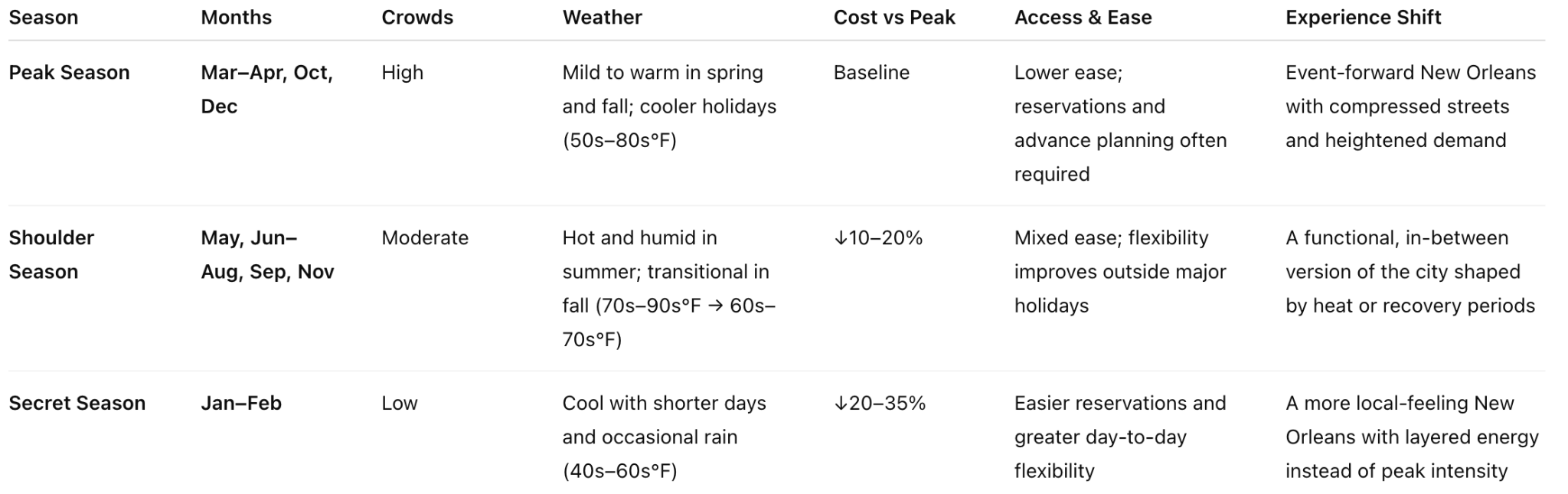
Read our full explainer here → Peak vs Shoulder vs Secret Season: How to Read Our Guides
IIf you’re looking for specific hotel recommendations, activity ideas, packing lists, or family-focused planning, check out all of our New Orleans content here.
New Orleans is often associated with Mardi Gras chaos, packed music venues, and warm-weather festivals. But January and February quietly offer something different — and, for the right traveler, something deeper.
While this period sits between major peak moments rather than a complete lull, it rewards intentional planning with lower baseline pricing, easier access to core experiences, and a more local rhythm.
This is New Orleans between peaks — not empty — and not peak season. It’s layered, lively, and accessible in a way that peak moments aren’t.
The Verdict:
YES
New Orleans meaningfully benefits from being visited during its secret season.
Winter brings a shift in energy rather than a drop-off. The city’s music, food, and culture remain fully accessible, with a more manageable pace and better availability — if you plan thoughtfully around Carnival timing and variable weather.
Why January–February Works
During peak moments like Mardi Gras or major festival weekends, New Orleans can feel overwhelming — high prices, crowded streets, and limited reservations.
In early winter, that intensity relaxes.
You’ll notice:
A calmer, more walkable feel across neighborhoods
Easier access to music venues, museums, and cultural institutions
Hotel rates that sit below peak-season pricing
Dining and reservations with more flexibility
Local-focused winter programming without the crush of peak crowds
This isn’t a quieter city — it’s one with room to breathe. It’s New Orleans in focus, not frenzy.
What to Expect in Secret Season
This period comes with tradeoffs that are important to understand.
January and February typically bring:
Cooler, sometimes damp weather
Occasional rain fronts
Shorter daylight hours than spring/summer
Some weather-dependent activities that may operate on reduced schedules
Event weeks that can temporarily spike demand
That said, extreme cold is rare, and the city remains comfortable for walking and exploration with appropriate layering and flexibility. Where you stay also has an impact; review our Where to Stay in New Orleans guide here.
What Still Works Exceptionally Well
A big reason New Orleans earns a YES is how intact the core experience remains when crowds ease.
Still fully enjoyable:
Neighborhood walks and historic districts
Music — indoors and in smaller venues
Museums, galleries, and cultural spaces
Restaurants, cocktail bars, and late-night spots
Architectural and cultural exploration
These experiences are less about the weather and more about the city’s soul — and that’s still present in winter.
Secret Season Annual Events
New Orleans’ winter calendar is distinct and layered, and specific dates matter.
Carnival season begins → January–February — Parades and celebrations build gradually toward peak weeks.
Winter music & cultural programming → January–February — Local-focused shows and events with manageable crowds.
Mardi Gras (varies) → Late February / Early March — A major spike in crowds, prices, and demand.
Note: Event weeks — especially leading into Mardi Gras — can significantly impact hotel rates, dining availability, and crowd levels. Planning around these windows is essential.
For more detailed information on the specific annual events for the current/upcoming Secret Season, see What to do in New Orleans in Winter (Without the Crowds) - post coming soon!
Cost Snapshot
New Orleans in secret season is noticeably easier on budgets outside high-demand event weeks.
Hotels: Often ~20–40% lower than peak rates outside major parade weeks
Flights: Frequently ~20–35% lower depending on origin and timing
Dining & activities: Better availability and occasional seasonal specials
For travelers prioritizing value without losing the city’s character, these differences are meaningful.
How to Plan Your Days in New Orleans’ Secret Season
New Orleans rewards flexibility and a rhythm-based approach rather than strict itineraries. Winter weather can shift during the day, and event timing can change crowd levels quickly. Structure your days around neighborhoods or experiences, and let the city unfold:
Sunny or Mild Day
Explore neighborhoods on foot
Sip coffee or cocktails in courtyard cafes
Enjoy outdoor music or street-level activity
Cool or Overcast Day
Visit museums, galleries, and historic indoor spaces
Choose extended brunches or late lunches
Seek live music indoors later in the evening
Rainy or Variable Weather Day
Dive into jazz clubs, cocktail bars, and cooking demos
Wander historic interiors or curated exhibits
Let the day unfold with comfort-focused exploration
Evening Planning (Winter-Specific Tip)
Winter evenings arrive earlier, and in New Orleans that shift subtly changes how nights unfold.
Many travelers find:
Late afternoons are a natural transition point from walking to indoor spaces
Early dinners feel easier to secure and more relaxed than late-night reservations
Evenings lean toward music, cocktails, and conversation rather than extensive sightseeing
Because so much of New Orleans’ culture lives indoors — in dining rooms, clubs, and intimate venues — this rhythm works especially well during Secret Season, when nights feel layered rather than rushed.
This flexible approach highlights the city’s character rather than racing from one checklist item to another. For a more detailed approach to how to spend your time in New Orleans during its Secret Season, see What to do in New Orleans in Winter (Without the Crowds) - post coming soon!
Who This Season Is Best For
New Orleans in January–February is ideal if you:
Enjoy music, architecture, and culture without peak crowds
Prioritize local experiences over festival-driven travel
Want easier access to reservations and walkable exploration
Are comfortable planning around event calendars
Prefer depth and nuance to sheer bustle
It’s less ideal if:
You’re seeking guaranteed warm weather for outdoor-only activities
You want to visit specifically for peak festival energy (e.g., Mardi Gras peak weeks)
Zero chance of variable weather impacts is a requirement
Planning Beyond This Guide
This post focuses on whether New England’s secret season works — and why.
If you’re ready to plan the details, these companion guides go deeper and are updated seasonally:
What to Do in New Orleans in Winter (Without the Crowds) → coming soon!
What to Pack for New Orleans’ Secret Season → coming soon!
New Orleans’ Secret Season — Family Edition → coming soon!
These posts are refreshed annually to reflect availability, pricing, and seasonal nuances.
The Bottom Line
In New Orleans’ Secret Season, the city feels less condensed, not less alive. Winter brings quieter stretches between events, easier access to cultural touchpoints, and a pace that invites deeper engagement with music, food, and place. A little awareness of the event calendar is all it takes to see the city at its most dimensional.
For travelers who value timing as much as destination, this is a clear YES.
Last reviewed for the January –February 2026 season.
