Lisbon’s Secret Season: January–February
How to use this guide:
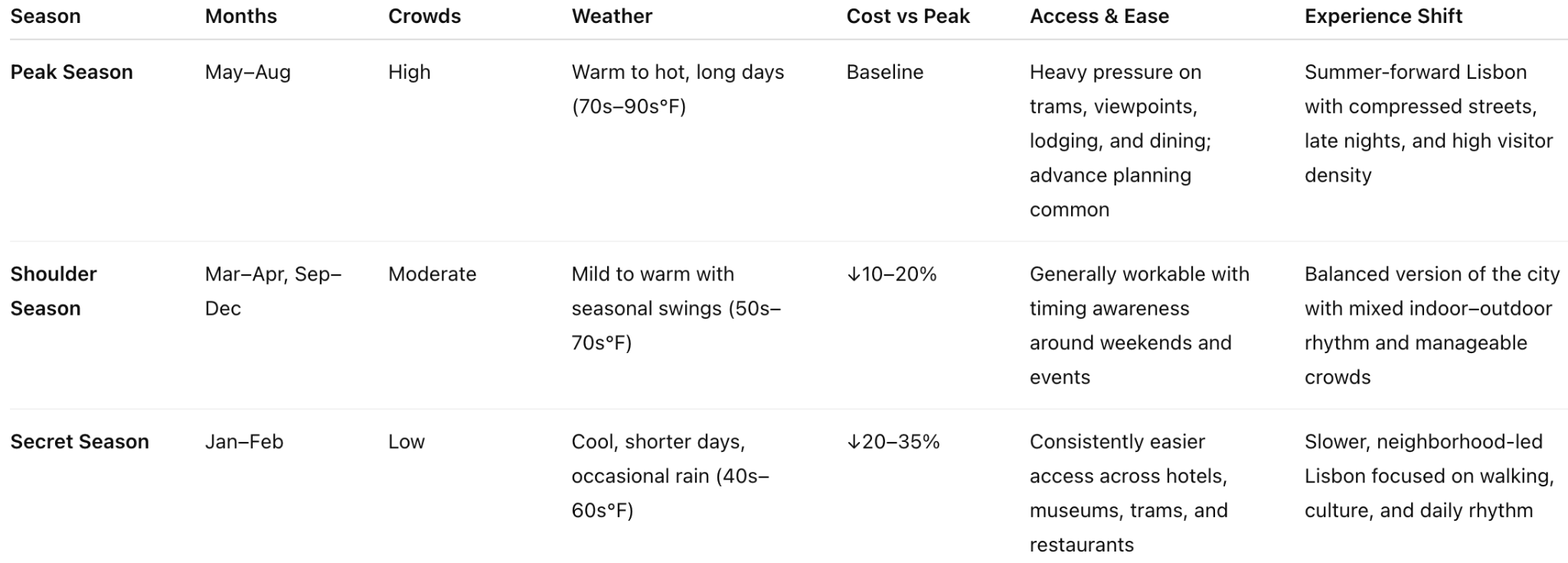
This is Lisbon’s destination-level Secret Season guide — designed to help you decide whether visiting during the quieter winter months actually works for you. To understand how Lisbon’s Secret Season compares to the rest of the year, the table below outlines how Peak, Shoulder, and Secret seasons function across all months — including differences in crowds, cost, and overall travel experience.
Read our full explainer here → Peak vs Shoulder vs Secret Season: How to Read Our Guides
If you’re looking for specific hotel recommendations, activity ideas, packing lists, or family-focused planning, check out all of our Lisbon content here.
Lisbon is often framed as a sunny, summer-forward European capital — rooftop bars, riverfront terraces, and packed viewpoints stretching late into the evening. But January through February quietly offers a different version of the city, one that favors light, walkability, and cultural depth over peak-season energy.
This is when Lisbon slows down just enough to feel breathable, without slipping into true off-season dormancy.
The result is a city that’s easier to navigate, easier to afford, and still very much alive.
The Verdict:
YES
Lisbon meaningfully benefits from being visited during its Secret Season.
Winter brings fewer crowds, better value, and a calmer daily rhythm — without losing the visual richness, walkability, or cultural backbone that define the city. Neighborhoods remain active, museums and restaurants operate normally, and outdoor exploration is still very much part of the experience.
For travelers who value atmosphere over heat, and access over intensity, Lisbon is a clear YES during January and February.
Why January–February Works
At peak, Lisbon’s popularity concentrates pressure into narrow spaces — trams fill, viewpoints clog, and reservations require advance planning.
In winter, that pressure eases.
You’ll notice:
Historic neighborhoods that feel navigable rather than compressed
Easier access to trams, viewpoints, and walking routes
Greater availability at restaurants and cultural sites
A steadier, more local pace across the city
Lisbon doesn’t shut down in winter — it simply becomes easier to move through.
What to Expect in Winter
This is not warm-weather Lisbon, and expectations matter.
January and February typically bring:
Mild daytime temperatures relative to northern Europe
Cooler evenings, especially near the river
Periodic rain systems, often passing rather than constant
Shorter daylight hours than spring and summer
Outdoor time remains viable most days, but layering is essential. Comfortable walking shoes matter year-round — hills and slick stone surfaces don’t disappear in winter. Where you stay can shape the experience; see our Where to Stay During Lisbon’s Secret Season guide (coming soon) for neighborhood context.
What Still Works Exceptionally Well
Lisbon earns a YES because its core experience remains largely intact.
Still fully enjoyable:
Neighborhood wandering through Alfama, Graça, and Mouraria
Miradouros and city viewpoints between weather windows
Museums, galleries, and tiled interiors
The food scene, from casual tascas to destination dining
Riverfront walks in Belém and central Lisbon
Without peak-season congestion, these experiences often feel slower and more personal.
Secret Season Annual Events
Lisbon’s winter calendar is quieter than spring and summer, but a few moments are worth noting.
New Year’s Concert (January) — Classical music performances to open the year
Carnival (February) — Parades and celebrations, more prominent outside the city center
Note: Carnival timing can temporarily raise hotel demand and prices. Week-to-week planning flexibility helps preserve Secret Season value.
For a closer look at seasonal programming, see What to Do in Lisbon in Winter (Without the Crowds). - coming soon
Cost Snapshot
Lisbon remains one of Western Europe’s stronger value capitals — and winter pricing sharpens that advantage.
Hotels: Often ~25–45% lower than peak spring and summer rates
Flights: Frequently ~15–30% lower, depending on origin and booking window
Tours & experiences: Widely available with easier booking and smaller group sizes
For travelers balancing cost and experience, January and February offer meaningful relief.
How to Plan Your Days in Lisbon’s Secret Season
Lisbon in winter rewards flexibility and neighborhood-based planning rather than rigid itineraries. Shorter days and lighter crowds encourage a slower, more intentional rhythm.
Sunny or Mild Day
When the weather cooperates, Lisbon’s outdoor strengths still shine.
Ideal for:
Walking routes through historic neighborhoods
Miradouro hopping with café stops in between
Riverfront strolls paired with museums or markets
Long lunches that stretch into the afternoon
With fewer crowds, doubling back or lingering feels natural.
Cool or Overcast Day
Cooler conditions pair well with Lisbon’s cultural depth.
Plan for:
Museums and indoor landmarks
Tram rides as transit rather than novelty
Neighborhood shopping and galleries
Extended meals and coffee breaks
These days often reveal a quieter, more local version of the city.
Rainy Day
Rain shifts the focus inward — but doesn’t stall the trip.
Good rainy-day options include:
Museum clusters and indoor exhibitions
Cafés, bakeries, and wine bars
Covered markets and small shops
Food-focused experiences that run regardless of weather
Because winter reservations are easier to secure, rainy days often become some of the most relaxed dining days of the trip.
Evening Planning (Winter-Specific Tip)
Winter evenings arrive earlier, which subtly reshapes daily pacing.
Many travelers find:
Late afternoons are ideal for transitioning indoors
Earlier dinners feel more natural than late-night plans
Evenings center on food, conversation, and low-key exploration
This rhythm suits Lisbon well during quieter months. For a deeper breakdown, see What to Do in Lisbon in Winter (Without the Crowds) - coming soon.
Who This Season Is Best For
Lisbon in January–February is ideal if you:
Prefer fewer crowds and easier movement
Enjoy walkable cities with visual depth
Value museums, food, and neighborhoods over nightlife
Appreciate mild winter conditions by European standards
Are comfortable planning around occasional rain
It’s less ideal if:
You’re planning a beach-forward trip
Warm weather is non-negotiable
You want late-night, peak-season energy every evening
Planning Beyond This Guide
This post focuses on whether Lisbon’s Secret Season works — and why.
If you’re ready to plan details, these companion guides go deeper and are updated seasonally:
Where to Stay During Lisbon’s Secret Season → coming soon
What to Do in Lisbon in Winter (Without the Crowds) → coming soon
What to Pack for Lisbon’s Secret Season → coming soon
Lisbon’s Secret Season — Family Edition → coming soon
These posts are refreshed annually to reflect availability, pricing, and seasonal nuance.
The Bottom Line
Lisbon’s Secret Season doesn’t strip the city down — it slows it down.
January and February offer a version of Lisbon that feels calmer, more navigable, and more affordable, while preserving the light, color, and cultural texture that make it worth visiting in the first place.
For travelers who care about timing as much as destination, this remains a confident YES.
Last reviewed for the January–February 2026 season.
