Barcelona’s Secret Season: January–February
How to use this guide
This is Barcelona’s destination-level Secret Season guide — designed to help you decide whether visiting during the winter months actually works for you. It’s important to note that not every off-peak window delivers the same experience, and not every destination benefits equally from fewer crowds. This guide explains what changes in winter, what still works, and who Barcelona’s Secret Season is (and isn’t) a good fit for.
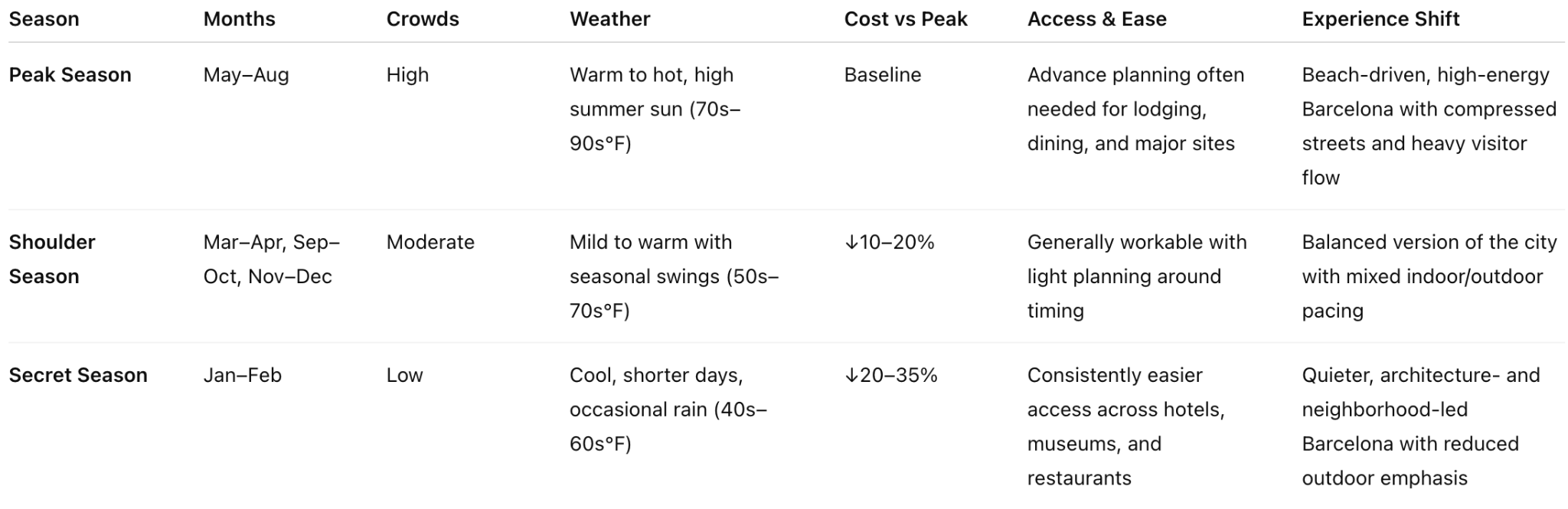
To understand how Barcelona’s Secret Season compares to the rest of the year, the table below outlines how Peak, Shoulder, and Secret seasons function across all months — including differences in crowds, cost, and overall travel experience.
Read our full explainer here → Peak vs Shoulder vs Secret Season: How to Read Our Guides.
If you’re looking for specific hotel recommendations, activity ideas, packing lists, or family-focused planning, check out all of our Barcelona Secret Season content here.
Why Barcelona is different in winter
Barcelona is often imagined through beach days, long terrace lunches, evening strolls, and an outdoor rhythm tied closely to weather and daylight. Those elements don’t disappear in January and February — but they no longer define the experience.
Unlike cities whose identity is anchored primarily indoors, Barcelona’s everyday life leans heavily on:
Outdoor dining and plazas
Waterfront movement
Casual strolling across neighborhoods
Warm-weather social energy
Winter shifts these from central to secondary. The city continues to function — but the emphasis moves inward.
That’s why Barcelona’s Secret Season isn’t a clear YES for everyone.
The Verdict
MAYBE
Barcelona in January and February can be rewarding — but only for travelers whose expectations align with a quieter, cooler version of the city.
Crowds thin meaningfully, architectural landmarks are easier to experience, and pricing is reduced across hotels and flights. At the same time, cooler temperatures, shorter days, and a muted outdoor scene narrow the range of experiences that feel effortless.
This season works best for travelers who value culture, architecture, and calmer pacing over beach energy and constant outdoor life.
Why January–February can work
During peak spring and summer months, Barcelona’s most iconic areas — from the Gothic Quarter to Gaudí sites — absorb heavy visitor volume. Winter relieves much of that pressure.
You may notice:
Shorter waits and more breathing room at major landmarks
Easier access to museums and cultural spaces
Less congestion in central neighborhoods
A more local, residential rhythm outside tourist corridors
For travelers who find peak Barcelona overstimulating, winter creates space to engage more deliberately.
What to expect in winter
Barcelona’s Secret Season benefits from clear expectation setting — particularly around weather and outdoor time.
Typical winter conditions include:
Cool daytime temperatures, generally in the low- to mid-50s°F
Chilly mornings and evenings
Occasional rain and overcast days
Shorter daylight hours compared to summer
This is not a season built around lingering outdoors for hours at a time. Planning days with a mix of indoor and outdoor stops matters more here than during warmer months. Be sure to review our What to pack for January–February Barcelona travel guide (coming soon).
What still works exceptionally well
One reason Barcelona earns a MAYBE — rather than a NO — is that its core experiences remain strong year-round.
Still fully functional and rewarding:
Architectural landmarks and historic sites
Museums, galleries, and cultural institutions
Indoor markets, bakeries, and dining
Neighborhood exploration when paced thoughtfully
The city doesn’t shut down in winter — it simply rebalances how time is spent.
What’s more limited or changed
Winter does reshape some of Barcelona’s most expected experiences.
More limited in January–February:
Beachgoing and seaside lounging
Outdoor terrace culture, especially in the evenings
Late-night street energy tied to warm weather
Some seasonal tours or waterfront activities
Barcelona’s appeal becomes more contained and inward-focused — a shift some travelers appreciate, and others find underwhelming.
Secret Season Annual Events
Barcelona’s winter calendar is quieter than other times of year, but a few annual moments can influence planning.
Sant Antoni Festival (January) — A local neighborhood celebration with parades and cultural events that bring short bursts of activity.
Barcelona 080 Fashion Week (February) — Industry-focused events that can affect hotel availability near venues.
Note: While winter events are limited, specific dates can temporarily increase demand in concentrated areas.
For more detail on seasonal activities, see What to do in Barcelona during winter (post coming soon).
Cost snapshot
Traveling to Barcelona in winter often brings noticeable value.
Hotels: typically ~20–40% lower than peak spring and summer
Flights: often 15–30% lower post-holiday from major hubs (varies by origin)
Dining & experiences: easier reservations; pricing remains relatively steady
Savings tend to appear most clearly in lodging and airfare rather than daily expenses.
How to plan your days during Barcelona’s Secret Season
Winter days in Barcelona benefit from balance rather than volume. More detailed examples live in What to do in Barcelona during winter (post coming soon). Where you stay also plays a meaningful role — see Where to stay during Barcelona’s Secret Season .
Clear but cool days
Best used for:
Architecture-focused walks
Neighborhood wandering with café stops
Early dinners rather than late nights
Chilly days
Ideal for:
Museums and exhibitions
Historic interiors and landmarks
Markets and shopping streets
Rainy days
Plan for:
Extended indoor stretches
Long meals and cultural venues
Concerts, performances, or galleries
Flexibility matters more than fitting everything in.
Who this Secret Season is best for
Barcelona in January–February is a good fit if you:
Value architecture, museums, and food culture
Prefer lighter crowds over outdoor buzz
Are comfortable with cooler temperatures
Enjoy slower, more intentional travel days
It’s less ideal if you:
Expect a beach-driven experience
Want lively outdoor terraces day and night
Plan to spend most of your time outside
Are sensitive to cool or damp weather
Are traveling with young children and hoping winter timing will significantly ease daily logistics — dining rhythms remain late, and the season’s benefits skew more adult-oriented than family-focused
Planning beyond this guide
This post focuses on whether Barcelona’s Secret Season works — and why it’s a MAYBE.
For travelers who decide it does fit, these companion guides go deeper and are updated seasonally:
What to do in Barcelona during winter — coming soon
What to pack for January–February travel — coming soon
Each builds on the same January–February timing and is refreshed annually.
The bottom line
Barcelona’s Secret Season isn’t about replicating peak-season energy — it’s about access, space, and value.
For travelers drawn to architecture, cultural depth, and a calmer city rhythm, January and February can be a smart and rewarding window. For those seeking sun, beaches, and constant outdoor life, waiting for shoulder season may better match expectations.
That distinction is exactly what Secret Season Travel is here to clarify.
