Charleston’s Secret Season: December–February
How to use this guide:
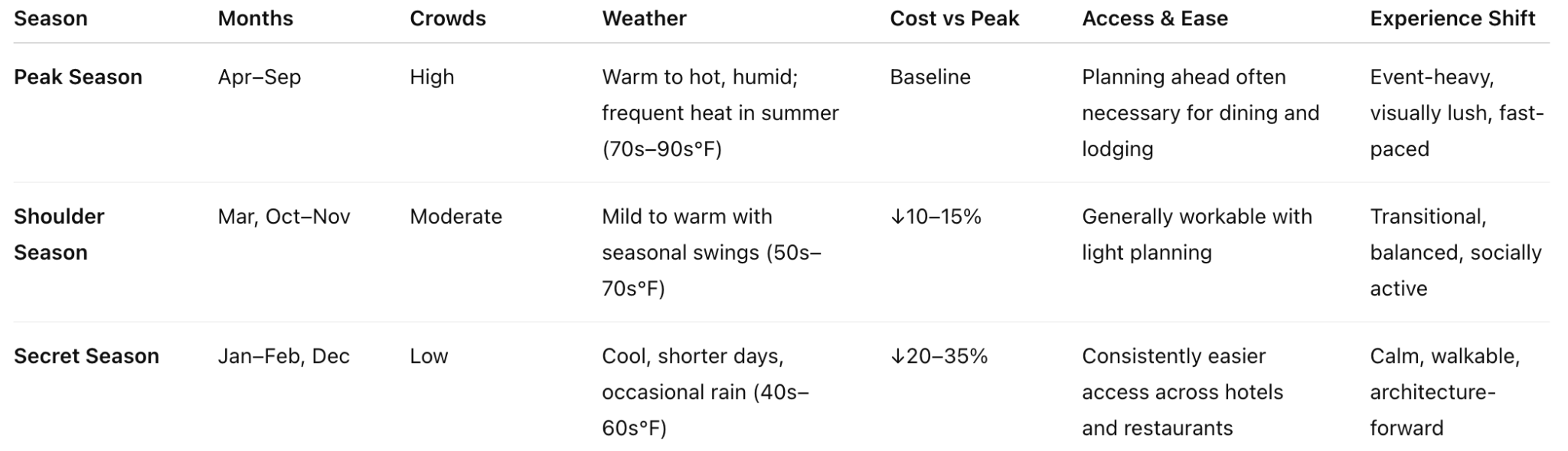
This is Charleston’s destination-level Secret Season guide — designed to help you decide whether visiting during the off-peak winter months actually works for you. To understand how Charleston’s Secret Season compares to the rest of the year, the table below outlines how Peak, Shoulder, and Secret seasons function across all months — including differences in crowds, cost, and overall travel experience.
Read our full explainer here → Peak vs Shoulder vs Secret Season: How to Read Our Guides
If you’re looking for specific hotel recommendations, activity ideas, packing lists, or family-focused planning, check out all of our Charleston content here.
Charleston is often associated with spring blooms, summer heat, and packed weekends. But December through February quietly offers something different — and, for the right traveler, something better.
While January and February represent the calmest core of Charleston’s secret season, December still benefits from lighter crowds and a slower pace once early holiday travel subsides.
This is Charleston without the crowds, without the rush, and without losing what makes the city special in the first place.
The Verdict:
YES
Charleston meaningfully benefits from being visited during its secret season.
Winter brings lighter crowds, easier reservations, and a slower pace across the city — without stripping away the experiences people come for. Historic neighborhoods remain fully walkable, restaurants stay open, and the city’s character doesn’t hibernate.
For travelers who value atmosphere and flexibility, this is one of the clearest YES cases for secret season travel.
Why December–February Works
During peak season, Charleston can feel compressed. Popular streets fill quickly, dining reservations book far in advance, and hotel rates climb.
In winter, that pressure lifts.
You’ll notice:
A quieter Historic District with room to wander
Greater flexibility at restaurants and bars
Less congestion around major landmarks
A slower, more local rhythm across neighborhoods
Charleston doesn’t shut down in winter — it simply exhales.
What to Expect in Winter
This is not beach season, and expectations matter.
December through February typically bring:
Mild daytime temperatures with cooler evenings
Occasional rain fronts
Shorter daylight hours
Less seasonal landscaping in bloom
Boat tours and harbor cruises that are weather-dependent and may operate on reduced schedules
That said, extreme cold is rare, and the city remains comfortable for walking with light layers. Most visitors find the tradeoffs manageable — especially when plans are flexible. Where you stay also has an impact; review our Where to Stay in Charleston guide here.
What Still Works Exceptionally Well
One of the reasons Charleston earns a YES is how intact the core experience remains.
Still fully enjoyable:
Historic neighborhoods and architectural walking routes
Waterfront paths and harbor views
Museums, galleries, and historic homes
The restaurant scene, from casual to fine dining
Shopping districts throughout the city
Without peak crowds, these experiences often feel more personal and unhurried.
Secret Season Annual Events
Charleston’s winter calendar is quieter than peak spring and summer, but a few annual moments are worth noting.
Holiday season (December) — Festive decor and events early in the month; crowds taper after mid-December
Charleston Restaurant Week (January) — Prix-fixe menus across the city that can increase dining demand
Cultural performances and exhibitions (Winter) — Ongoing programming at theaters and cultural institutions
Note: While winter events are more limited than in peak season, specific weeks — especially in December — can temporarily increase hotel rates and restaurant demand.
For more detailed information on the specific annual events for the current/upcoming Secret Season, see What to do in Charleston in Winter (Without the Crowds).
Cost Snapshot
While Charleston is never a “budget” destination, winter offers noticeable relief.
Hotels: Often ~20–35% lower than peak spring and summer rates
Flights: Frequently discounted, especially from East Coast hubs
Dining & attractions: Fully operational year-round
For travelers prioritizing value without sacrificing quality, winter pricing is a meaningful advantage.
How to Plan Your Days in Charleston’s Secret Season
Charleston in December through February rewards intentional flexibility rather than rigid itineraries. With fewer crowds and shorter daylight hours, the city works best when you plan around walkable anchors and let the day unfold from there.
Sunny or Mild Day
When the weather cooperates, Charleston’s walkability shines.
Ideal for:
Long neighborhood walks through the Historic District
Exploring side streets beyond main tourist corridors
Waterfront paths and harbor views
Outdoor coffee stops or casual patio lunches
Without peak-season congestion, you can move slowly, double back, and linger without feeling rushed.
Cool or Overcast Day
Cooler temperatures are well-suited to Charleston’s architectural and cultural depth.
Plan for:
Museums and historic homes
Architectural exploration at a slower pace
Indoor shopping districts
Longer, sit-down meals that stretch the afternoon
These days tend to feel more intimate and local — a version of Charleston that’s often missed in busier months.
Rainy Day
Rain doesn’t derail a Charleston winter trip — it simply redirects it.
Good rainy-day options include:
Gallery hopping and indoor exhibits
Cafés, bakeries, and wine bars
Shopping districts with easy indoor access
Unhurried lunches or early dinners
Because reservations are easier to secure in winter, rainy days often turn into some of the most relaxed dining experiences of the trip.
Evening Planning (Winter-Specific Tip)
Winter evenings arrive earlier, so it helps to plan dinners slightly earlier than you might in summer.
Many travelers find:
Late afternoons are ideal for transitioning indoors
Early dinners feel more natural than late nights
Evenings skew toward dining, drinks, and conversation rather than extensive sightseeing
This rhythm fits Charleston particularly well during quieter months. For a more detailed approach to how to spend your time in Charleston during its Secret Season, see What to do in Charleston in Winter (Without the Crowds).
Who This Season Is Best For
Charleston in December–February is ideal if you:
Prefer fewer crowds and a slower pace
Enjoy walkable, neighborhood-based exploration
Value atmosphere over festivals and events
Want strong dining access without competition
Are comfortable layering for cooler evenings
It’s less ideal if:
You’re planning a beach-forward trip
You want guaranteed boat tours or water-based activities
Warm weather is a non-negotiable priority
Planning Beyond This Guide
This post focuses on whether Charleston’s secret season works — and why.
If you’re ready to plan the details, these companion guides go deeper and are updated seasonally:
What to Pack for Charleston’s Secret Season → coming soon!
Charleston’s Secret Season — Family Edition → coming soon!
These posts are refreshed annually to reflect availability, pricing, and seasonal nuances.
The Bottom Line
Charleston’s secret season doesn’t take away from the experience — it makes it easier to enjoy. December through February brings fewer crowds, easier access, and a slower pace, while the core of what makes Charleston appealing remains fully intact.
For travelers who value timing as much as destination, this remains a clear YES.
Last reviewed for the December 2025 – February 2026 season.
