Amsterdam’s Secret Season: January–February
How to use this guide
This is Amsterdam’s destination-level Secret Season guide — designed to help you decide whether visiting during the winter months actually works for you. It’s important to note that not every off-peak window delivers the same experience, and not every destination benefits equally from fewer crowds. This guide explains what changes in winter, what still works, and who Amsterdam’s Secret Season is (and isn’t) a good fit for.
To understand how Amsterdam’s Secret Season compares to the rest of the year, the table below outlines how Peak, Shoulder, and Secret seasons function across all months — including differences in crowds, cost, and overall travel experience.
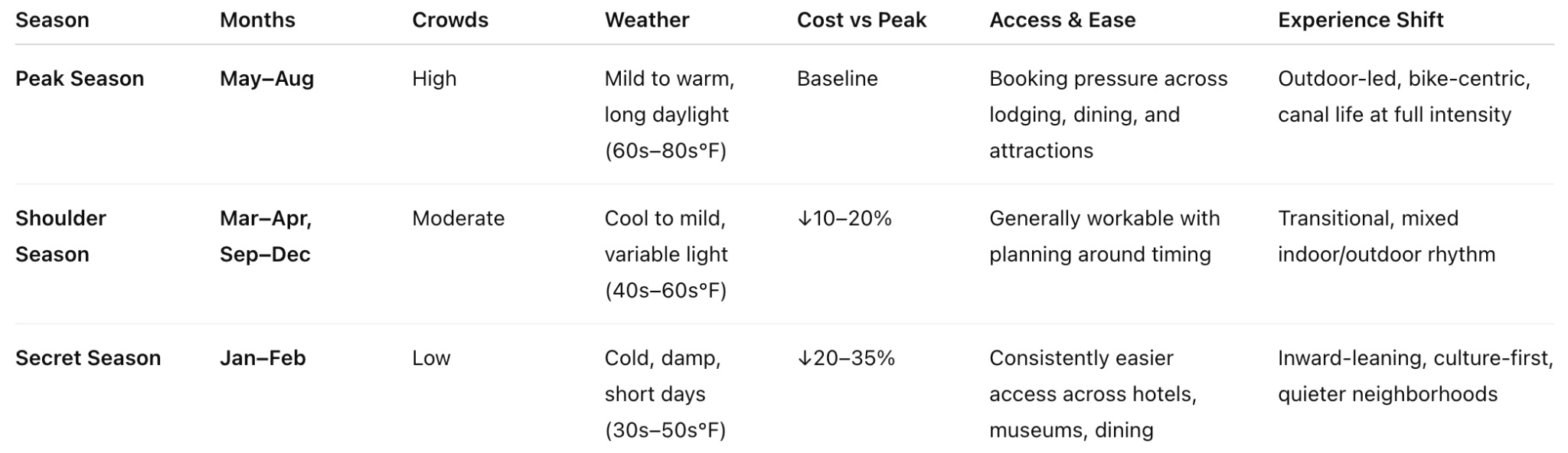
Read our full explainer here → Peak vs Shoulder vs Secret Season: How to Read Our Guides
If you’re looking for specific hotel recommendations, activity ideas, packing lists, or family-focused planning, check out all of our Amsterdam secret season content here.
Why Amsterdam is different in winter
Amsterdam is often pictured through canalside cafés, bicycles in motion, outdoor markets, and long wandering days. Those elements still exist in January and February — but they become less central to the experience.
Unlike cities whose identity is anchored indoors (museums, food, architecture), Amsterdam’s everyday rhythm relies heavily on:
Outdoor movement
Casual biking
Street-level energy
Extended daylight for wandering
Winter doesn’t remove these — but it changes how often and how comfortably they happen.
That’s why Amsterdam’s Secret Season is not a clear YES for everyone.
The Verdict
MAYBE
Amsterdam in January and February can be rewarding — but only for travelers who are comfortable planning around winter conditions and shifting expectations.
Crowds thin significantly, museums and cultural institutions remain excellent, and hotel pricing softens. At the same time, cold, damp weather and short daylight hours narrow the range of experiences that feel enjoyable without effort.
This season works best for travelers who prioritize culture, quiet, and access over outdoor atmosphere and spontaneity.
Why January–February can work
During peak spring and summer months, Amsterdam’s historic core becomes densely crowded. Winter removes much of that pressure.
You may notice:
Significantly fewer visitors at major museums and landmarks
Easier restaurant reservations and calmer cafés
Less congestion in central neighborhoods
A quieter, more residential feel beyond the main tourist corridors
For travelers who find peak Amsterdam overwhelming, winter offers space to slow down and engage more intentionally.
What to expect in winter
Amsterdam’s Secret Season requires clear expectation setting — especially around weather and daylight.
Typical winter conditions include:
Cold temperatures, often hovering near freezing
Frequent dampness and gray skies
Short daylight windows
Outdoor time that is highly weather-dependent
This is not a season for long, unstructured wandering days. Planning matters more here than in warmer months. Be sure to review our What to pack for January–February Amsterdam travel post - coming soon.
What still works exceptionally well
One reason Amsterdam earns a MAYBE — rather than a NO — is that its cultural infrastructure remains strong year-round.
Still fully functional and rewarding:
Major museums and galleries (Rijksmuseum, Van Gogh Museum, Anne Frank House)
Concert halls, theaters, and performance venues
Cafés, brown bars, bakeries, and neighborhood dining
Shopping districts and indoor markets
The city doesn’t shut down in winter — it simply shifts indoors.
What’s more limited or changed
Winter does alter how some of Amsterdam’s most iconic experiences feel.
More limited in January–February:
Canal cruising (less appealing in poor weather)
Casual biking for visitors unfamiliar with winter cycling
Outdoor markets and street-level energy
Parks and waterfront areas, which feel subdued
Amsterdam’s charm becomes quieter and more contained — which some travelers appreciate, and others miss.
Secret Season Annual Events
Amsterdam’s winter calendar is quieter than spring and summer, but a few annual moments are worth noting.
Amsterdam Light Festival (January) — Evening light installations along select canals that can increase activity on specific nights, particularly for canal cruises
International Film Festival Rotterdam (January–February) — A major regional film festival held outside Amsterdam with minimal impact on the city itself
National Tulip Day (January) — A one-day winter event marking the symbolic start of tulip season, with short-lived crowds near the event location
Note: While winter events are more limited than in peak season, specific evenings — particularly during the Light Festival — can temporarily increase demand in concentrated areas.
For more detailed information on how these events intersect with winter planning, see What to do in Amsterdam during winter - post coming soon.
Cost snapshot
Traveling to Amsterdam in winter often brings modest but meaningful value.
Hotels: typically ~20–35% lower than peak spring and summer
Flights: often 15–30% lower post-holiday from major hubs (varies by origin)
Tours & activities: easier availability; pricing remains relatively stable
Savings tend to show up most clearly in lodging and airfare, rather than dining or attractions.
How to plan your days during Amsterdam’s Secret Season
Winter days in Amsterdam benefit from intentional pacing rather than volume; more specific examples are found in What to do in Amsterdam during winter (post coming soon). Factors that really play into how you plan your days also involve where you stay - check out the Where to Stay during Amsterdam’s Secret Season.
Clear but cold days
Best used for:
Short canal-side walks between indoor stops
Neighborhood exploration with cafés as anchors
Early dinners rather than late nights
Chilly days
Ideal for:
Museum visits and exhibitions
Architectural landmarks and interior spaces
Shopping streets and indoor markets
Rainy or windy days
Plan for:
Extended indoor blocks (museums, galleries, performances)
Brown bars, bakeries, and long meals
Cultural venues rather than sightseeing routes
Flexibility matters more than itinerary density.
Who this Secret Season is best for
Amsterdam in January–February is a good fit if you:
Value museums, culture, and quieter cities
Prefer fewer crowds over outdoor atmosphere
Are comfortable adjusting plans based on weather
Enjoy slower, more deliberate travel days
It’s less ideal if you:
Want long walking days and spontaneous wandering
Expect lively street energy and outdoor cafés
Rely heavily on biking as your primary way of exploring
Are sensitive to cold, damp climates
Are traveling with young children and rely heavily on strollers, flexible pacing, or calmer walking conditions — winter crowd relief doesn’t fully offset narrow sidewalks, bike traffic, and cold, windy conditions for families.
Planning beyond this guide
This post focuses on whether Amsterdam’s Secret Season works — and why it’s a MAYBE.
For travelers who decide it does fit, these companion guides go deeper and are updated seasonally:
What to do in Amsterdam during winter - coming soon!
What to pack for January–February travel - coming soon!
Each builds on the same January–February timing and is updated for each annual secret season.
The bottom line
Amsterdam’s Secret Season isn’t about finding a hidden version of peak-season magic — it’s about access and calm.
For travelers who value cultural depth, quiet streets, and fewer crowds, January and February can offer a rewarding way to experience the city. For others, waiting for shoulder season may better match expectations.
That distinction is exactly what Secret Season Travel is here to clarify.
